When artists carry the unfair burden of bad organisation

Feel free to send your testimonials or request for advice at info @ dif- ev.org or via our contact form.
_________________________________

Promoters should want their guests to have the best musical experience possible, hence should treat artists’ technical and logistics needs as a priority – as long as demands remain reasonable.
However, a lot of promoters consider they have “bought” the talent, so artists should smile and perform like circus dogs, jumping through every flaming hoop, because it will be primarily their career that gets damaged if the show goes wrong or if they leave because they could not take the abuse.

How do we expect marginalised artists to deliver professional stage performances when getting through soundcheck is already an exhausting battle, and how could promoters not support the artists they booked delivering the best show possible?

As we saw with Grimes’ Coachella fiasco DJ set in 2024, folks were quick to attack a woman’s career until her technician came clean online. Despite his explaining how his rushed tech preps lead to a performance failure, people fell for the clickbait articles and looked the other way when the real story was revealed.

Both promoters and technical teams are protected by their anonymity, and while they benefit from artists’ fame and stage work, once an artist or their team raise an organisational issue, they are quick to shift the blame on the talent being “difficult” or “disorganised”, gaslight performers into thinking they are the problem – and this of course can escalate a lot depending on how marginalised the artist is.

51% women have faced gender-based discrimination in the music industry. We think of lack of opportunity, pay gap, ageism/racism/family status double standards, sexual harassment… but maybe the most common act of casual sexism is technicians patronising women and gender-diverse musicians, schooling them on their own sound, refusing to provide professional service, becoming dismissive or agressive if the musicians keep on asking for their technical needs to be met.

• Promoters and event organisers need to vet their team and be responsible for all aspects of their events, including techs.
• Artists and agents must make it clear on booking contracts that the tech rider is a sine qua non condition to perform.
• Technical teams who are already doing the work, need to make it known, and grow awareness on good practices.
• Technical teams who still believe they can project their own shortcomings on marginalised artists, need to re-train or retire.


Artist Visas & Cultural Mobility

Extract from Cultural Mobility: a Basic Right for All
by Transmitting Stones who also created the Anti Visa Passport Zine.

“We are cultural workers and artists writing to you with urgency and outrage. The Schengen visa system is becoming increasingly discriminatory and unjust for African cultural workers and artists, and its impact on international cultural diversity is undeniable. The current visa system is a bureaucratic, capitalist, and humiliating instrument for Africans.

Under the pretext of border security, Europe systematically excludes Africans from participating in the global cultural ecosystem, controlling access to opportunities, industries, and vital cultural exchanges. This is evident through the excessive paperwork disconnected from local economic realities, the prohibitive visa fees and outsourced services and the arbitrary rejections without refunds or clear justification.

Together, these practices form a new colonial regime based on border control, determining who has the right of participation in international cultural exchange. How can we create, collaborate, and share stories in a world where our right to move is denied? Cultural mobility should not be a privilege for western countries, it is a basic right, long denied through policies that treat African passports as threats rather than equals.”

At dif we believe that art knows no border, art is the universal language that allows us to focus on what connects all humans rather than what might divide us. When instead art becomes a means of influencing Global South cultures, while refusing that in exchange they present their art to the West, we face a dangerous and unfair dynamic.

Already in 2023 the EU raised 130M by rejecting visas mostly from Black and Brown musicians from Africa and Asia. EU artists can mostly play easily in these countries, but the EU does not want to hear these artists’ music; they instead steal financial resources to weaken them. Tamizdat commented on the same subject in the USA in 2024, and Le Guess Who Festival told stories of denied visas that same year.

Sadly, in 2025, both the EU and the USA decided to restrict cultural mobility even more: when current events seem to worsen every other day, and if governments keep on preventing us from sharing art and culture with each other, will we only communicate across borders via purposefully polarising, algorithm-manipulated, and monitored social media platforms?

DEI x Music x New Tech

This article is based on a talk at a W3b Lab online event featuring dif co-founder Nadia Says.
Read the full talk HERE and read about sustainable AI in music on Mixmag.

Art and new tech can work hand in hand in ways that are not necessarily cringe or gimmicky when artists and curators have a serious understanding of that synergy. Many argue that oftentimes, artworks featuring new tech just use buzz technologies, and that it doesn’t bring anything special to the art. Plus the tech scene suffers from an over-representation of cis-white men and of the stereotype of the “tech bros” who may not have connections to the art scene, nor share its essential values, and have already polluted new tech with sexism, racism, ableism…
To that we can answer that an AI will be as racist or anti-racist as what you train it with. And indeed we’ve all heard of incidents with AI being racist, for example with facial recognition used as a dystopian surveillance system – multi-disciplinary artist Vanessa Reynolds reacted to such an occurrence in Detroit. Or with how Capital Records had to drop their racially insensitive and appropriating AI rapper.

There are other DEI challenges, such as green sustainability, that has to remain central to new tech advancement, but also needs to be put into the context of previous means that may have been as polluting, to avoid unwarranted opposition to new tech.
Yet another equity challenge as in many industries, is how the Western world hoards high-paying jobs while exploiting the Global South with low-paid and high risk jobs such as online violence moderation – read reports on Big Tech’s Success: The untold stories of the exploitation of African workers and HERE about AI-training.

So why should musical creatives build impactful space on web3 when facing all these challenges?
The case for collective ownership is one that seems to belong on the blockchain; the reason why it would be necessary in the music industry is to ensure fairness for artists, to make sure creatives do not build communities for the benefit of corporations and do not reap the reward – such as when Bandcamp was bought twice without its community having any say, or Soundcloud, built by the community, but where many users and staff had to leave the platform after creating immense added value for major labels and shareholders.

Another aspect of how web3 will gain importance in the music scene, is the advent of UGC (user-generated content) in its broader meaning: the audience no longer wants to just receive music, they want to participate; this is part of the gamification of the music industry. This can be done through NFTs and Metaverse shows, among other new tech avenues.
Additionally about Metaverse and streamed shows, while these virtual experiences will never replace in-person live shows, they are needed alternatives to address certain DEI concerns. Here is a very shortened list of reasons why some music lovers cannot attend concerts, festivals, and club nights in person often or at all: immunodeficiency, tinnitus, social anxiety, gender-based safety concerns, distance, finances, age, need for lyric subs, allergy to smoke, substance abuse early recovery, having to take care of someone at home, etc.

Web3 is a chance for artists and their teams to have better visibility and control over distribution and payment splits, direct connections to fans, not giving up big parts of their income to middlemen, having new ways to copyright their work on the blockchain, and the list goes on.
This also means that music field workers, including artists, would need to learn how to use new platforms, that are not straight-forward and evolve literally every minute, and not always with full transparency or safety. While this is by no means easy, it remains not only a great opportunity, but also a duty: if genuine scene actors, especially those marginalised, do not pro-actively make space in these systems, the result will be new Metas, Spotifys, Live Nations, and other corporations that milk “content” without giving back to the artists or their fans. The time for creatives to make use of new tech, and with that process improve new tech for all, is now.

Social and eco sustainability work hand in hand

In the dif intro, we say we advocate for social and eco sustainability, why do we mix DEI with ecology? Simply because ecology is fully part of DEI as pollution first affects individuals and communities already marginalised by the post-colonial and capitalist order, may they live in the Global South and lacking access to clean water or live in a European city having asthma; pollution kills over 7 million people a year.
Culture is probably very low on the list of polluting industries compared to big oil, fast fashion, mass agriculture or war. However, cultural workers lowering our impact can already make a bit of a difference, but mostly, we are very visible to the public eye and can influence whole communities to pay attention to eco sustainability.

Recently, a festival un-booked a headliner who wanted to fly by private jet. The use of a jet was justified by a tight schedule from the artist’s side, but does the end justify this kind of means, or could the artist play the festival next year instead? Following Covid restrictions, many artists see an urgency in accumulating high-paying gigs and funds, this is very understandable; however, a person who already has a proper living may not need to accumulate more at the expense of the quality of air others need to breathe, nor by sending out the message that private jets are welcome in our industry – also looking at you Burning Man and Taylor Swift.
Transport is one big polluter in our industry, could streaming and residencies help, could events booking more local acts help as well? No such major issue will have one answer, but the discussion should at least be public and wide-spread, together we can crowd-source workable solutions.
Another side of this discussion is how the public access events: not everyone can bike (especially if not sober), not every venue is accessible by public transport, and not everyone is safe using public transport (especially at night). Once again, not an issue with a unique solution, however considering best options and car-pooling is something everyone can do, venues and promoters also have their part to play in this equation.

Another big polluter is electricity. Some studies show that venues switching off their fridges when not in use not only reduces their electricity pollution significantly, but also reduces their bill, so why is this is not a normal practice yet? You can find more green tips via Clubtopia, they provide advice and onsite consulting as well, free of charge for venues, festivals, and promoters. They have also created a Code of Conduct as a pledge that drafts good practices both for eco and social sustainability.
Another action of interest in Berlin, is the collection of bottle metal caps to create pocket ashtrays. This action means we should aim to use glass bottles instead of plastic ones, recycle anything that can be, and not throw cigarette buds that leak toxic chemicals in the soil and water just anywhere –  also because there is no good excuse not to clean up after oneself, even when having fun, cleaning crews are not our maids.

Learn more about green touring with Berlin – New Delhi singer-songwriter Ditty, watch Afrorack’s plea for the right to repair HERE, read about less polluting vinyl options HERE and here for lathe cutting (method that can produce a single record for artists who will not sell dozens of copies) – while understanding that mass-streaming is a growing eco and ethical problem, and check out how dif helped implementing green tips for a Superbooth 24 room hosted by music tech brands. Here is what happened below, feel free to send us your tips or queries via info @ dif-ev .org or via the (anonymous) contact form.

__________________ 

The room was decorated with lots of rented plants, to make sure people could feel good with something organic among all the tech and to focus their attention on the theme.
All drinks were bought locally in recycled crates and glass bottles, including a beer brewed locally and DIN ISO 14001 / 50001-certified. When possible, a keg plus attendees bringing their own cups is even better!
Vegan snacks were served, single-wrapped or paper-wrapped, ecological and/or fair trade, mostly produced locally; bins for recycling and for trash were provided both in the guest and staff areas. The onsite team took time to switch off all electricals every evening, and switch them back on every morning: this extra hour of daily work lowered the electricity consumption by half. They also rented LED lights only, and used natural light as much as possible.
Most materials were rented (meaning nothing was new, all re-used, some since the 70s), materials that were bought new will be reused by the brands, or their service providers, or donated to community centers (like the floor carpet). Some rental companies charged for carbon offset, and for the rest, they bought 45 trees and gifted the certificates to guests to raise awareness on the matter.
All crew car-pooled, which was a nice way to bond out of work, and part of the artistic content was also dedicated to talking about how music can support conservation work worldwide.

DEI in music marketing podcast

Following the project DEI 2023, DEI 2024 launches with a podcast aired on dublab and presenting a panel talk recorded in Los Angeles on the occasion of a new instalment of the LA x Berlin connection event series by YMA.
The discussion revolves about Diversity, Equity, and Inclusion in music marketing and features Ale Cohen (dublab Director, curator, musician), Janishia Jones (data research expert, DEI advocate, musician), and Maria Gironas (Cool Shit Cool People founder, Keychange US GM), and is moderated by YMA and dif co-founder Nadia Says. While the subject is vast, the speakers shared views about the use of social media and new tech tools, as well as the role of data, and some ideas for music marketing to break through the glass of ceiling of diversity to reach true inclusion and equity.


Recording at and by Seahorse Sound Studios, editing by Leah King, with thanks to the German Consulate of Los Angeles, plus Elektron and Orchestral Tools.

Podcast tracklist:
Leah King – Hold On, out soon
Ivory Fields – Blasted
Mentrix – If (Conscious Summary remix)

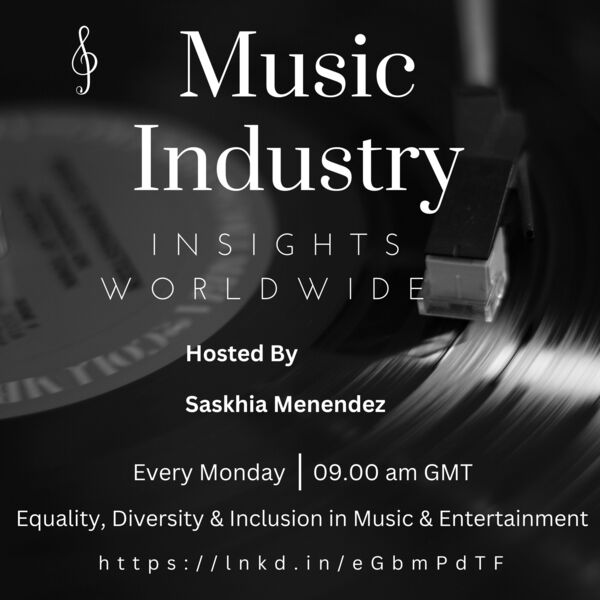
DEI in music & entertainment podcast series by Saskhia Menendez

Discover the “Harmonizing Voices: Global Perspectives on Equality & Diversity in the Music and Entertainment Industries” podcast series curated and hosted by DEI activist Saskhia Menendez. Saskhia invites guests from different fields in the music industry and has genuine discussions about the multiple barriers intersectional individuals overcome daily to keep afloat or strive.
➔ Access all episodes on www.buzzsprout.com/2020328, no account needed, just click and listen.

What this podcast series is about in the words of its curator:
“Music is a universal language that transcends boundaries, connects cultures, and touches our deepest emotions. It has the power to change lives, challenge norms, and inspire social change. However, as we celebrate the incredible diversity of voices and talents within the music industry, it’s essential to acknowledge that the path to equality, diversity, and inclusion has not always been harmonious.
In this podcast, we aim to spotlight the stories, struggles, and successes of those working tirelessly to make the music industry a more inclusive and equitable space for all. We will delve into the experiences of artists, producers, managers, and industry professionals who are breaking barriers, pushing boundaries, and reshaping the landscape of the music world.
Join us as we engage in thought-provoking conversations, explore ground-breaking initiatives, and celebrate the music that moves us. Together, we will amplify the voices of change and work towards creating a more vibrant, just, and diverse music industry. So, whether you’re a music enthusiast, an industry insider, or someone looking to be inspired, “Harmonizing Voices” is your guide to the evolving and ever-inspiring world of music industry equality, diversity, and inclusion.”

Also read the Global Trans Charter Saskhia has designed to support trans and nb individuals and their allies in the music industry.

DEI in cultural public funding

One could argue that public funding is the backbone of culture in Europe. We could also argue that the level of support given from several European countries to the arts is fantastic compared to other rich nations whose governments cannot be bothered. But the system is not perfect, and decisions made by government organisations on what arts and culture they deem worthy of supporting can reflect the narrow tastes of decision makers and entrench discrimination. In order for public funding of the arts to be a tool of democracy and support a vibrant and varied arts scene, there needs to be consideration for Diversity, Equity, and Inclusion in the selection and distribution process.

Learn more by reading the full article in Mixmag, and listening the two-part companion podcast on dublab on their website or from the players below, and feel free to send in your questions or own examples via info @ dif-ev .org or via the (anonymous) contact form if you prefer. Make sure to mention whether your examples can be added to our public or private research or not at all. We are also happy to exchange and share some of our extended research on DEI in public funding upon request.

While this DEI in cultural funding overall research started ca five years ago, this specific podcast came to life thanks to the DEI 2023 group project. Here you can read about the initial discrimination issues and here is the resolution statement; in the podcast you will hear from different actors in this specific case but also about general matters of institutional discrimination. DEI 2023 has published one more podcast in German, and you can also enjoy some VR concerts via Diasporic Arts Alliance.


Podcast credits: EU grant specialist Alessandro De Angelis, Barbara Gande from ADNB, musician Grinderteeth, drag artist HP Loveshaft, researcher Janishia Jones, Joe Frankland from PRS Foundation & Keychange, artist Malonda, music writers Marcus Barnes & Patrick Hinton, curator Sandira Blas, and singer-songwriter Wizzy.
With thanks to Sarah Kivi for the studio recording and editing, Orchestral Tools for the studio space, and to Jason Jervis for mixing.

Podcast & tracklist 1/2: AK18T (Sarah Kivi remix) – Dimitri Pike

Podcast & tracklist 2/2:
Perpetual Destruction (Sarah Kivi mix) – Nbor vs. Dylan Wexler
Feuerfrau (Tiffadelic remix) – Malonda
Blood of Medusa – Ginderteeth

A history of dif

Here is the little story of how the dif Verein (to be translated as member’s club or NGO) or in its full version “diverse, inclusive, and fair”, and the accompanying website came to be. The common expression is DEI, Diversity, Equity, and Inclusion, in real life equity tends to be the last piece of the puzzle, my guess is the letters were exchanged to avoid the less funky acronym DIE.

With dif, we put these values in the order we believe they happen in real-life situations: diversity is the tip of the iceberg, it is visible and many brands want to use it as a marketing tool – this what we call diversity-washing. Inclusion is the next step, not only teams, lineups, boards, etc. are diverse, but each individual is included in decision-making, team work, content, etc. The last one, equity or in our case we use the simpler adjective fair – this is a word that children learn at a small age and that shapes our vision of the world, is harder to pin down as it is less visible. Equity is of course about sharing resources or paying people in a fair way, it also touches to the notion of social differences and sustainability: fairness is not the same as equality, in order for each person to reach the same goal, they may need different or ampler resources. It is also possible that sometimes, someone must give up a piece of privilege so someone else can break through the glass ceiling.

So how is this fair you ask? Because society is about the well-being of each individual, but also about common well-being; how can someone feel happy when their neighbour is suffering. By giving up a piece of privilege, we encourage sustainability in society, which in the long term benefits us all. A common example in the music industry is when companies or festivals spend more time and money to recruit, train, and include diverse workers or diverse acts, and when in the long term they get a bigger audience, turn higher profits, and offer a more interesting experience to all parties involved.

And now, why small letters for dif? We have nothing against grammar, but small letters are cute and less shouty. All letters being small, in opposition to only the first one being capitalized, is a graphic way of saying we believe everybody is at the same level: clout, financial means, or millions of social media followers do not make a person more important than another, the positive actions that a person does for the world at their own level are what make them shine.
Oh and the dif letters in the logo are read from bottom to top, because the People will rise.

Finally, why these colours, and why do they change each time you refresh the page? We picked soft colours, because the subject of DEI is already hot enough without adding flashy colours to it. The colours change because we did not want to settle on just a colour for this or that… we love change and visual diversity – which is also why we decided not to overly format our biographies, so you can hear each of our voices, us the six founding members of dif, a bunch of old and new friends and colleagues all connected by the music industry. The web studio that supported our vision found a fun way to mix human decision with technological randomisation – for those who appreciate tech stuff: they used a colour generator, input pastel colours, and applied a coded filter that allows colour shifts entirely with CSS.

We aimed for the website to be easy to navigate and for the layout not to be overwhelming. We hope you will find our content a useful resource to promote DEI in the music industry, and you can reach us at info @ dif-ev . org or via the contact form.